
Editor’s Note: This post was updated on February 19, 2026 for accuracy and comprehensiveness. It was originally published on September 19, 2017.
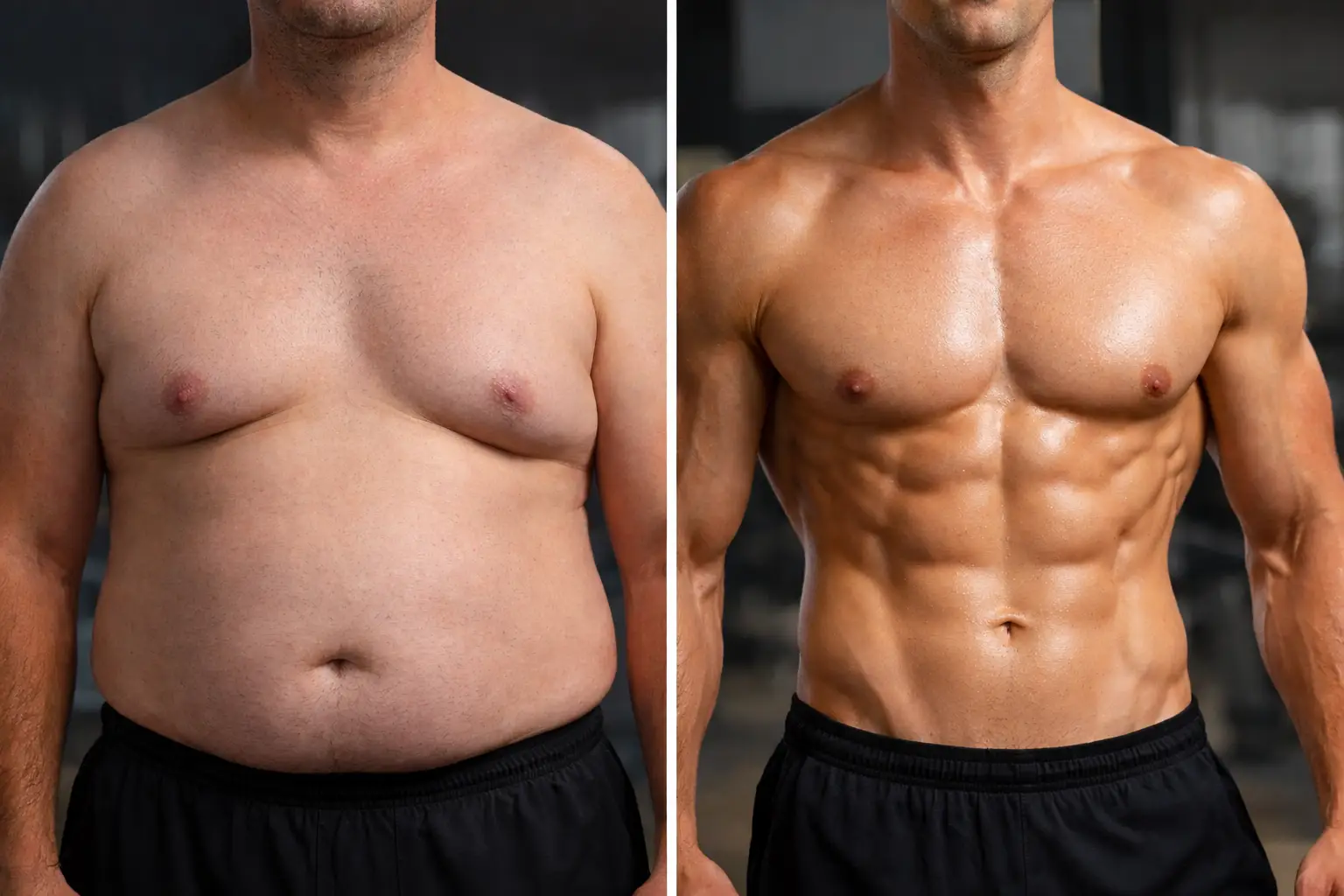
You’ve probably heard that a 3,500-calorie deficit leads to about one pound of fat loss. Muscle gain, however, doesn’t work the same way. There’s no simple formula for building muscle.
That’s because muscle growth depends on many factors, including your training experience, nutrition, recovery, age, and genetics. These variables make it hard to set clear expectations.
So, how much muscle can you gain in a month? The answer depends on your experience level. In this guide, we'll dive into the research-backed science of muscle growth, explore how many pounds of muscle you can gain in a month based on your experience level, and reveal the key strategies that separate average progress from exceptional gains.
How Much Muscle Can You Gain in One Month?
The question of muscle gain per month doesn't have a one-size-fits-all answer. Research shows that the rate of muscle growth follows a predictable pattern based primarily on training experience, with beginners having the fastest gains and advanced lifters seeing much slower progress:
Beginners
If you're new to resistance training (less than 6-12 months of consistent lifting), you're in for some exciting times. Beginners typically experience what's known as "newbie gains", a period of rapid muscle development.
A systematic review found that resistance training increased muscle mass by an average of 1.53 kg (approximately 3.4 pounds) across various training durations, with untrained individuals showing significantly higher gains than their trained counterparts.
Average muscle gain per month for beginners: In practical terms, most beginners can expect to gain about 0.5 to 1.5 pounds of muscle in a month when following a well-structured training program, eating enough protein and calories, and allowing proper recovery.
Intermediate Trainees
Once you've been training consistently for 1-3 years, the party slows down considerably. Your body has adapted to resistance training, and you're approaching your genetic potential at a faster rate. This slowdown isn't a sign you're doing something wrong; it's simply biology. As you accumulate more muscle mass, your body becomes increasingly resistant to further hypertrophy.
Research comparing trained versus untrained individuals consistently shows this disparity. One study examining 8 non-strength-trained athletes versus 8 strength-trained athletes found that the untrained group experienced a 5.6% increase in muscle size after 21 weeks, while the trained athletes experienced significantly less growth during the same period.
Average muscle gain per month for intermediate trainees: For intermediate trainees, muscle gain typically slows to around 0.25–0.75 pounds per month, reflecting the diminishing returns seen as training experience increases.
Advanced Trainees
For those who've been lifting seriously for 3+ years, muscle gains become painstakingly slow. At this level, even maintaining muscle mass while staying lean becomes the primary challenge. Many advanced lifters go through extended periods (months) where they see no measurable muscle gain despite consistent training.
A 2020 meta-analysis found that people with several years of lifting experience saw smaller and more inconsistent gains. In some intermediate and advanced trainees, muscle growth was minimal even after long training periods.
The study also highlighted that excessive training volume (too many sets per workout) can actually impair muscle growth, with a negative correlation observed between sets per workout and hypertrophy gains.
Average muscle gain per month for advanced trainees: Advanced lifters typically gain about 0.1 to 0.25 pounds of muscle per month. In many cases, muscle growth is so slow that it may not be measurable on a month-to-month basis, even with proper training and nutrition.
Key Factors That Influence Monthly Muscle Growth
While training experience is the primary determinant of how much muscle you can gain in a month, several other factors play crucial roles in your results:
1. Nutrition
At a fundamental level, muscle growth starts with the nutrients you put into your body. You cannot build muscle without the proper raw materials. Think of nutrition as the bricks and mortar for your muscular construction project; without adequate supplies, no amount of training will produce results.
Protein intake stands as the cornerstone of muscle-building nutrition. Research suggests higher protein intake supports muscle protein synthesis, though individual needs vary based on training status and overall diet. Protein needs scale with body size and activity level, which is why higher intakes are often discussed in muscle-building research.
Caloric surplus is equally important. Muscle gain generally requires sufficient energy intake to support training and tissue growth. This provides the energy necessary for both training and muscle tissue synthesis.
Quality matters too. While you can technically build muscle eating junk food (provided you hit your protein and calorie targets), whole foods provide the micronutrients, fiber, and sustained energy that optimize performance and recovery.
High-Quality Whole Food Protein Sources
Food (Whole Foods) | Serving Size | Protein (approx.) |
Chicken breast (cooked) | 4 oz (113 g) | ~26 g |
Turkey breast (cooked) | 4 oz (113 g) | ~25 g |
Lean beef (90% lean) | 4 oz (113 g) | ~22 g |
Salmon | 4 oz (113 g) | ~23 g |
Eggs | 2 large eggs | ~12 g |
Greek yogurt (plain, nonfat) | 1 cup (225 g) | ~20 g |
Cottage cheese (low-fat) | 1 cup (225 g) | ~24 g |
Lentils (cooked) | 1 cup | ~18 g |
Chickpeas (cooked) | 1 cup | ~14 g |
Tofu (firm) | ½ block (~150 g) | ~18 g |
Tempeh | ½ cup | ~15 g |
Quinoa (cooked) | 1 cup | ~8 g |
Milk (low-fat) | 1 cup | ~8 g |
2. Training Quality
The quality of your training stimulus determines whether you're maximizing your muscle gain per month or spinning your wheels.
Progressive overload is the fundamental principle. Progressively increasing training demands is a key principle associated with muscle growth. This could mean adding weight, performing more reps, increasing training volume, or reducing rest periods. Without progressive overload, your muscles have no reason to grow.
Training to near failure. Performing sets within 2-3 reps of muscular failure triggers optimal hypertrophic responses. Going through the motions with weights you could lift for 20 reps when you stop at 10 won't produce maximal results.
Volume and frequency matter significantly. Research has examined training volume and frequency as factors influencing muscle growth, though optimal amounts vary by individual. However, the meta-analysis referenced earlier found that excessive sets per workout (above a certain threshold) can actually hinder progress.
3. Fitness Level
Your current training status dramatically affects average muscle gain per month, as we've discussed. But it's worth emphasizing that this isn't just about years in the gym, it's about proximity to your genetic ceiling.
A 25-year-old who trained seriously for three years, took five years off, and recently returned to lifting will experience faster gains than someone who's trained consistently for eight years. This is partly due to "muscle memory" (previously trained muscles can regain lost size much faster than building new tissue from scratch).
4. Genetics and Age
Let's address the elephant in the room: genetics play a significant role in how many pounds of muscle you can gain in a month. Some people are "high responders" to resistance training, experiencing dramatic growth, while others are "low responders" who make gains at a frustratingly slow pace.
One study had participants train their quadriceps for 16 weeks. A quarter of subjects increased quad size by 58%, while another quarter made virtually zero size gains, despite following identical programs. Researchers found that the number of satellite cells (specialized muscle stem cells) predicted growth potential.
Age also factors into the equation, though perhaps less than many believe. While testosterone levels and muscle protein synthesis rates decline with age, research shows that older adults (50+) can still build muscle effectively (they just need higher protein intake and may require longer recovery periods between sessions).
Studies comparing young and older adults show that relative rates of muscle gain can be similar when training and nutrition are optimized, though absolute gains tend to be smaller in older populations due to starting with less muscle mass.
How to Maximize Muscle Gains in a Month

If you want to ensure you're reaching your maximum muscle gain per month potential, focus on these evidence-based strategies:
Progressive Overload and Heavy Lifting
The principle is simple: your muscles must face progressively greater challenges to continue adapting.Tracking training progress over time can help illustrate whether training stimulus is increasing (e.g., added weight, more reps, additional sets)
Focus on compound movements like squats, deadlifts, bench presses, rows, and overhead presses. These multi-joint exercises recruit the most muscle mass and allow for the heaviest loads, creating a powerful growth stimulus.
Train in the 6-12 rep range for most of your work. While all rep ranges can build muscle, moderate reps with challenging weights (typically 65-85% of your one-rep max) optimize the balance between mechanical tension and metabolic stress—two key drivers of hypertrophy.
Protein Intake and Supplementation
Hit your daily protein target without fail. Spread protein intake across 3-5 meals to maintain elevated muscle protein synthesis throughout the day. Distributing protein intake across meals is often discussed as a way to support muscle protein synthesis.
Time your protein strategically. While the "anabolic window" isn't as narrow as once believed, consuming protein within a few hours post-workout supports optimal recovery and growth.
Consider creatine monohydrate supplementation. Extensive research shows creatine can enhance strength gains, allowing for greater training volume and indirectly supporting muscle growth. Creatine supplementation has been widely studied in relation to strength and muscle gains.
Whey protein powder offers convenience, though it's not essential if you're meeting protein needs through whole foods. It's particularly useful post-workout when appetite is low but protein needs are high.
Strategic Training Splits and Exercise Variety
Training frequency is one of several variables that can influence muscle growth outcomes. Popular effective splits include:
Upper/Lower (4 days): Upper body on Monday and Thursday, lower body on Tuesday and Friday
Push/Pull/Legs (6 days): Pushing muscles, pulling muscles, and legs each trained twice weekly
Full Body (3 days): All major muscle groups every session, ideal for beginners
Include a variety of exercises targeting muscles from different angles. While compound movements should form your foundation, isolation exercises allow you to accumulate volume without excessive systemic fatigue.
Periodize your training by cycling through phases of different volumes and intensities. This prevents adaptation, reduces injury risk, and allows for strategic recovery periods.
Muscle Growth for Men vs. Women
One of the most persistent myths in fitness is that men and women build muscle completely differently. The reality is more nuanced and, in some ways, surprising.
Muscle Growth for Men

Men generally begin with more absolute muscle mass and much higher testosterone levels than women (roughly 10–15 times higher). This hormonal and physiological difference means men tend to gain more muscle in absolute terms and can ultimately achieve greater total muscularity, even when training programs are similar.
Large body-composition studies show that men have about 40% more skeletal muscle mass than women overall, with the difference being more pronounced in the upper body (~40%) than in the lower body (~30–33%). This helps explain why upper-body strength and size differences are typically larger between sexes.
When it comes to monthly muscle gain, these baseline differences mean men often add more total muscle mass, especially early on. Under optimal training, nutrition, and recovery, realistic expectations for men are:
Beginners: ~1–2 pounds of muscle per month
Intermediate trainees: ~0.5–1 pound per month
Advanced trainees: ~0–0.5 pounds per month
Muscle Growth for Women

Here's where it gets interesting: while women build less absolute muscle than men, research shows they gain muscle at similar relative rates when accounting for starting muscle mass.
A meta-analysis examined multiple studies comparing male and female muscle growth. The findings were the following: women and men experienced nearly identical percentage increases in muscle mass from resistance training. Women even showed slightly greater relative strength gains in upper body movements.
Women can expect these general monthly ranges:
Beginners: 0.5-1.25 pounds per month
Intermediate: 0.25-0.75 pounds per month
Advanced: 0.1-0.4 pounds per month
The absolute differences come from women starting with less muscle mass overall, not from an inability to build muscle as effectively. Pound for pound, women are every bit as capable of hypertrophy as men.
Bottom Line
Altering your body composition is no easy feat. It takes patience, effort, and commitment, but it’s definitely within your reach.
Understanding how much muscle you can gain in a month requires acknowledging both the science and your individual circumstances. While the average muscle gain per month varies from 1-2 pounds for beginners down to 0.25-0.5 pounds for advanced lifters, these ranges represent typical responses, not guarantees.
Research indicates that resistance training, adequate protein intake, and sufficient energy availability are associated with muscle growth.
Rather than obsessing over monthly measurements, focus on the long game. Set realistic expectations based on your experience level, trust the process, and celebrate incremental progress. The muscle you build month by month compounds into impressive long-term results that no shortcut can match.
Key Takeaways
Beginners can expect to gain 1-2 pounds of muscle per month (potentially up to 2-4 pounds in the first few months)
Intermediate lifters typically gain 0.5-1 pound of muscle per month after 1-3 years of training
Advanced trainees may only add 0.25-0.5 pounds per month, or 2-3 pounds annually
Training experience is the primary factor determining muscle gain per month, with gains slowing as you approach your genetic potential
Long-term consistency matters more than perfect monthly optimization; focus on sustainable habits over quick fixes
**
Max Gaitán, MEd is an exercise physiologist and a USA Triathlon Certified Coach. When he’s not coaching, studying, or writing, Max spends most of his time outdoors training for triathlons.